
How Arrest Warrants Work in Curry County
Under New Mexico Form 9-210, a judge finds probable cause and the warrant then commands an authorized officer to arrest the defendant and bring that person before the court without unnecessary delay. The document also records the offense, the statute or municipal ordinance, where it can be executed, the law-enforcement information system it enters, the issuing judge, the date, and the return. Which court issues it depends on the case. District Court handles district felony and general criminal matters in Curry County. Magistrate Court covers many misdemeanor, DWI, traffic, and felony preliminary cases. A municipal judge can issue a warrant in a city petty-misdemeanor, DWI/DUI, traffic, or ordinance matter. So use the case or citation to find the court, and do not assume the Curry County sheriff holds every arrest warrant.
Form 9-210: The Curry Arrest-Warrant Anatomy
The New Mexico arrest-warrant form is the best field guide to what a Curry County warrant contains. Expect a court and case number, a defendant identifier, the probable-cause command, the offense in common name, the NMSA section or municipal ordinance, the execution range, the destination law-enforcement system, the judge, the issue date, and the service return. A public description stays at that schema level. Personal descriptors and addresses stay out of it.
| Probable cause | The judicial finding that supports the arrest command. |
|---|---|
| Charge and law | Common offense description with an NMSA section or municipal ordinance. |
| Execution geography | Any jurisdiction, state, county, or city as selected on the form. |
| Agency entry | The warrant is entered into a law-enforcement information system. |
| Return | Arrest or service date, officer signature and title, and removal from the system. |
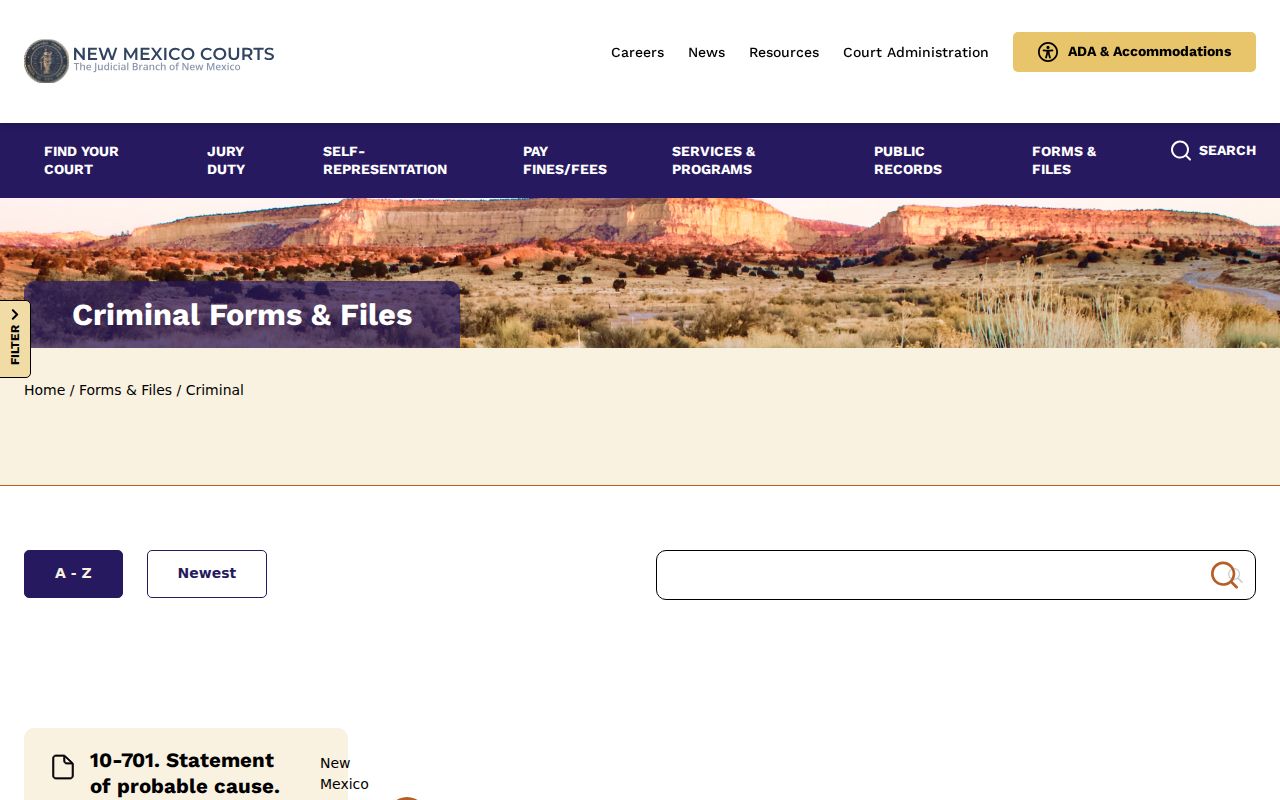
The criminal forms index sits the arrest form beside the bench and search forms. Seeing the three side by side helps a Curry County reader ask the clerk for the exact record type.
Who Can Be Directed to Serve a Curry Warrant
Form 9-210 can direct a warrant to an authorized full-time state or county officer, a municipal police officer, a campus security officer, or a tribal or Pueblo law-enforcement officer, depending on the form and the authority behind it. In Curry County, the practical contacts include the Sheriff's Office, Clovis Police Department, local city police, New Mexico State Police, or another agency the warrant names. Service can land with any of them. The directing line on the form tells you which door to knock on when you have a question about how a Curry warrant gets served.
| Agency layer | Possible role | Public contact limit |
|---|---|---|
| Curry County Sheriff's Office | County service, records, and warrant operations | No complete public roster or service matrix located |
| Clovis Police | City policing and directed service | No public warrant-search page located |
| New Mexico State Police | State law-enforcement systems and operations | Systems are not public self-service lists |
| Other authorized officer | Service under the warrant's direction | Ask the issuing court or named agency |
The sheriff contact page lists the Civil and Records Division at 700 N. Main Street, Suite 4, Clovis, phone (575) 769-2335. Use it for service and records questions. Court status still comes from the issuing court, not this route.
Arrest Warrants: What They Contain
A Case Lookup result can name the case without showing the full warrant document. The internal record may hold the issuing court, the judge, the probable-cause basis, the charge, the statute, the issue date, the execution scope, the agency, the service state, the return, and release terms. Personal identifiers and investigative material may be limited or withheld. Read the case number and court first. Then ask the Curry County clerk whether the record is an arrest warrant, a bench or FTA warrant, a summons, or some other process. Search warrants are different again. The blank official forms teach the vocabulary, but only the issuing court can say which status controls a particular Curry County case.
Curry District Court's Felony Warrant Role
Curry County District Court is the general-jurisdiction trial court for district felony and other criminal matters. You will find it at 700 N. Main Street, Suite 11, Clovis, NM 88101, phone (575) 742-7500, open weekdays 8 a.m. to 4 p.m. The phone tree splits criminal matters off from domestic, child support, juvenile, civil, and probate routes, so pick the criminal clerk option for a warrant question and have the case number ready. Do not confuse it with the Curry County Clerk at 417 Gidding Street. That office handles recording, elections, probate, and county administration. The District Court keeps the criminal file. The federal court source marks a separate federal layer only, and a Curry County District Court case still runs through the state court contact above.
How Warrants Get Served in Curry County
Curry County publishes no fixed booking timeline, bond counter schedule, or service assignment for every warrant. After service, the holding agency processes custody and the court sets release conditions under the applicable rules. Form 9-210 covers the arrest and return, but it creates no countywide same-day procedure. Call the issuing court before you appear anywhere. Ask whether counsel can request a recall or reset, whether a judge has set bond, whether a walk-through is permitted, and whether the court directs you to the sheriff, the Adult Detention Center, or another holding agency. The sheriff's Civil and Records Division can handle a service or records question in Curry County. Recall and release terms stay with the court.
Confirm first: The public page does not establish a Curry surrender window, bond counter, or required-ID rule. Ask the court where and when to report.
How the Return Block Shows Service and Removal
The return portion of Form 9-210 records the arrest or service event, the officer's signature and title, and removal from the law-enforcement system. Service does not end the underlying prosecution. Ask the Curry County court what appearance, release condition, or next hearing still remains after service or release.
- Issued
- The court ordered or created the arrest process.
- Served
- An authorized officer recorded execution or arrest.
- Returned
- The agency submitted the service or nonservice result back to the court.
- Removed
- The clerk recorded that the warrant was taken out of the identified law-enforcement system.
These terms describe record events only. They do not promise that every status shows up in New Mexico Case Lookup, so Curry County readers should confirm with the court.
Arrest Warrants, Summonses, and Bench Warrants
Two kinds of warrants do different jobs in Curry County. An arrest warrant rests on probable cause for a charge. A bench warrant is different. It answers a compliance problem, like a missed court date, an ignored subpoena, contempt, nonpayment, or a broken probation condition. A summons only tells you to appear, so it is not an arrest command; skip a criminal summons and the applicable rule lets a warrant follow.
| Record | Core question | First call |
|---|---|---|
| Arrest warrant | What charge and probable-cause order are recorded? | Issuing court criminal clerk |
| Bench warrant | What court obligation was missed and what resolution is allowed? | Issuing court clerk or judge |
| Summons | What appearance was ordered and when? | Court named on the summons |
| Search warrant | What public-access rule applies to the search instrument? | Court or records custodian |
The lower-court form helps you see the bench-warrant side, but Curry County readers should know it is not an arrest-warrant record.
Handling an Arrest Warrant in Your Name
Start with Case Lookup to find the case, then call the issuing court in Curry County. Ask where things stand: the bond or release condition, any extradition limit, the next setting, and whether your attorney can seek a recall, a reset, or a planned surrender. An empty public result is not an answer. The court and the agency serving the warrant may each hold a different piece of the record. If the court sends you to the jail or the sheriff, ask first about hours, payment, identification, property, and the court date that follows release. Curry County's public sources do not spell out all of that, so a lawyer can help with case-specific questions and ask the court which process applies. For a county-held service or return record, contact the Sheriff's Civil and Records Division at (575) 769-2335 or sheriffrecords@currycountynm.gov. When a defined county record is not online, the IPRA route in the county notice applies. IPRA gets you the paper; it does not clear the warrant.
The Court-Clerk Confirmation Chain for Arrest Warrants
New Mexico Case Lookup is the public starting point. From there, Curry District Court, Magistrate Court, or a municipal court confirms the judicial status of the warrant. The sheriff or another named agency handles questions about service, custody, or return. Curry County IPRA covers a public-record request when a defined county-held record sits outside the web. No single source works as a complete real-time county arrest-warrant list. Keep the chain in order, because a court can record a cancellation or release before every related system shows it. When the warrant is resolved, ask the clerk for a written receipt, a docket update, or other confirmation. Check the current official contact pages before you visit. Hours and locations change.
The U.S. District Court for the District of New Mexico shows the federal distinction. It publishes no Curry County state warrant roster.